

The Psychology Behind Competitive Gaming and Traditional Sports
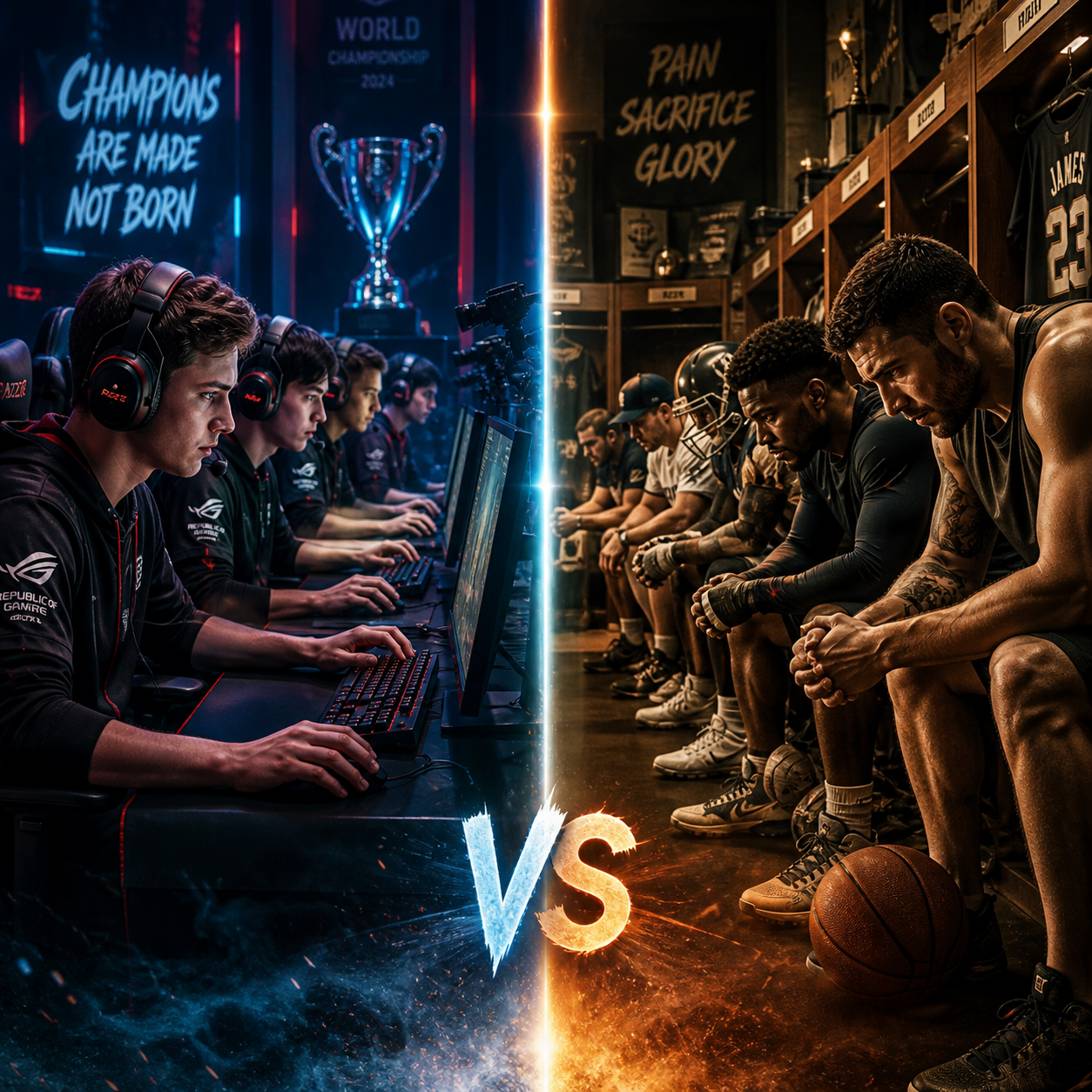
Competitive gaming and traditional sports look different on the surface, but both place heavy demands on attention, emotion, decision-making, and cooperation. A professional footballer reading a defensive shape and an esports player tracking several threats are solving different problems with many of the same psychological tools.
For fans and bettors, this overlap matters. Sports psychology can help explain why preparation, confidence, communication, and composure influence performance. It cannot guarantee an outcome, though. Psychology works best as one part of a wider assessment that also includes form, tactics, team news, fatigue, and matchup context.
Why Competitive Gaming and Traditional Sports Demand Similar Mental Skills
Competitive gaming and traditional sports demand discipline, concentration, preparation, motivation, and the ability to perform under pressure. The setting changes, but competitors in both environments must repeatedly execute skills when mistakes are costly and distractions are everywhere.
Training creates the foundation. Traditional athletes rehearse movement patterns, tactical systems, and set plays, while esports players practice mechanics, map control, timing, and strategic adaptations. Neither group can rely on talent alone. Consistent performance usually comes from structured repetition, review, rest, and honest evaluation after both wins and losses.
The mental challenge also extends beyond the event itself. Competitors must manage schedules, recover from disappointment, maintain motivation during long training periods, and accept that improvement often arrives gradually. This is where intrinsic motivation, such as enjoyment and mastery, can support performance more sustainably than external rewards alone.
There is a useful framework for comparing both fields: prepare, perceive, perform, and reset. Competitors prepare through practice, perceive changing information, perform under time pressure, and reset after each error or phase. Weakness in any one stage can affect the next. A technically gifted player who cannot reset after a mistake may underperform, just as a skilled athlete may struggle if anxiety disrupts perception.
Focus, Reaction Time, and Decision-Making Under Pressure
Focus and reaction time help competitors convert information into action, while decision-making under pressure determines whether that action is useful. Esports often compresses this process into milliseconds, whereas traditional sports combine rapid choices with movement, positioning, physical contact, and changing space.
In competitive gaming, concentration may involve monitoring a minimap, resource levels, opponent tendencies, team instructions, and timing windows at once. A player can have excellent reaction time and still make a poor decision by overcommitting or misreading the opponent’s intention. In traditional sports, a basketball player may have only a moment to pass, shoot, or defend, but the choice also depends on body position, fatigue, tactical structure, and teammates’ movement.
Errors can change the emotional and strategic direction of a contest. A missed tackle, failed penalty, or lost objective may increase urgency and encourage risk-taking. Momentum is partly psychological, but it is never purely psychological; scoreline, tactics, resources, and opponent quality also shape it.
Effective competitors use attention deliberately. They focus on the next relevant cue instead of replaying the previous error or anticipating an uncertain future. Pre-performance routines, controlled breathing, clear communication, and short tactical reminders can reduce mental clutter without slowing play.
Motivation, Confidence, and Performance Anxiety
Motivation supplies effort, confidence supports execution, and performance anxiety can either sharpen attention or interfere with it. The effect depends on its intensity, the competitor’s interpretation of pressure, and the quality of preparation.
Motivation comes in several forms. Intrinsic motivation encourages mastery, curiosity, and personal improvement. Extrinsic motivation may involve prize money, ranking points, selection, sponsorship, or recognition. External incentives can raise commitment, but they may also increase fear of failure when a competitor ties self-worth too closely to the result.
Confidence is more useful when it reflects evidence rather than optimism alone. A player who has prepared for a specific opponent, reviewed likely scenarios, and practiced recovery responses has a stronger basis for confidence than someone relying on reputation. Overconfidence carries its own risk: it can reduce attention to weaknesses and encourage unnecessary aggression.
Performance anxiety may appear as racing thoughts, tense muscles, rushed decisions, or difficulty maintaining concentration. Athletes and esports players manage it through routines that make competition familiar: consistent warm-ups, breathing exercises, visualization, tactical cues, and realistic practice under pressure. Coaches can also reduce uncertainty by clarifying roles and defining what success looks like beyond the final score.
One practical distinction helps: outcome goals focus on winning, while process goals focus on controllable actions such as communication quality, positioning, or disciplined timing. Process goals do not remove pressure, but they give attention a useful target.
Teamwork, Communication, and Leadership
Team dynamics influence performance because coordination allows several individuals to act as one system. In esports and traditional sports, trust, role specialization, communication, and leadership determine how quickly a team can respond when plans change.
Team-based gaming often makes communication highly explicit. Players may call enemy positions, cooldowns, rotations, resources, and tactical intentions in a matter of seconds. Traditional sports use verbal calls too, but teammates also communicate through spacing, eye contact, movement, gestures, and shared tactical habits.
Role specialization creates efficiency but can also create fragility. A team may depend on one player to initiate attacks, control tempo, defend space, or make late decisions. If opponents disrupt that role, the group needs enough flexibility to redistribute responsibility.
Leadership is therefore broader than being the loudest person. Strong leaders clarify priorities, regulate emotional tone, invite useful information, and make decisions when time is limited. Psychological safety matters as well. Teammates who can report a mistake or uncertainty early give the group more time to respond.
Communication quality can be assessed through three questions:
- Clarity: Can teammates understand the message quickly?
- Timing: Does the information arrive before action is required?
- Actionability: Does the message tell the team what to do or recognize?
A team with talented individuals may still underperform if communication becomes emotional, repetitive, or unclear under pressure.
Resilience, Momentum, and Emotional Control
Resilience is the ability to recover from setbacks while emotional control keeps attention directed toward the next decision. Both qualities help competitors adapt when a match, map, or event moves away from the original plan.
Recovery does not mean suppressing every emotion. Frustration can signal a tactical problem, while disappointment can reveal unrealistic expectations. The useful response is to acknowledge the feeling briefly, identify the controllable issue, and return to the next action. A competitor who remains angry after a mistake may chase an immediate correction and create a second error.
Momentum can amplify these reactions. A team that wins several exchanges may communicate more confidently and take initiative. A team that loses consecutive rounds may become passive or overly desperate. However, momentum is not a mystical force. It often reflects changing confidence, tactical adaptation, resource advantages, and the opponent’s altered behavior.
Coaches and players can build resilience through structured resets:
- Name the event without exaggerating it: a missed chance, lost round, or poor decision.
- Separate controllable factors from randomness and opponent quality.
- Choose one adjustment for the next phase.
- Use a brief physical or verbal cue to re-enter the contest.
This approach applies equally to a tennis player preparing for the next point and an esports team regrouping after losing an objective.
What These Psychological Factors Mean for Sports Betting
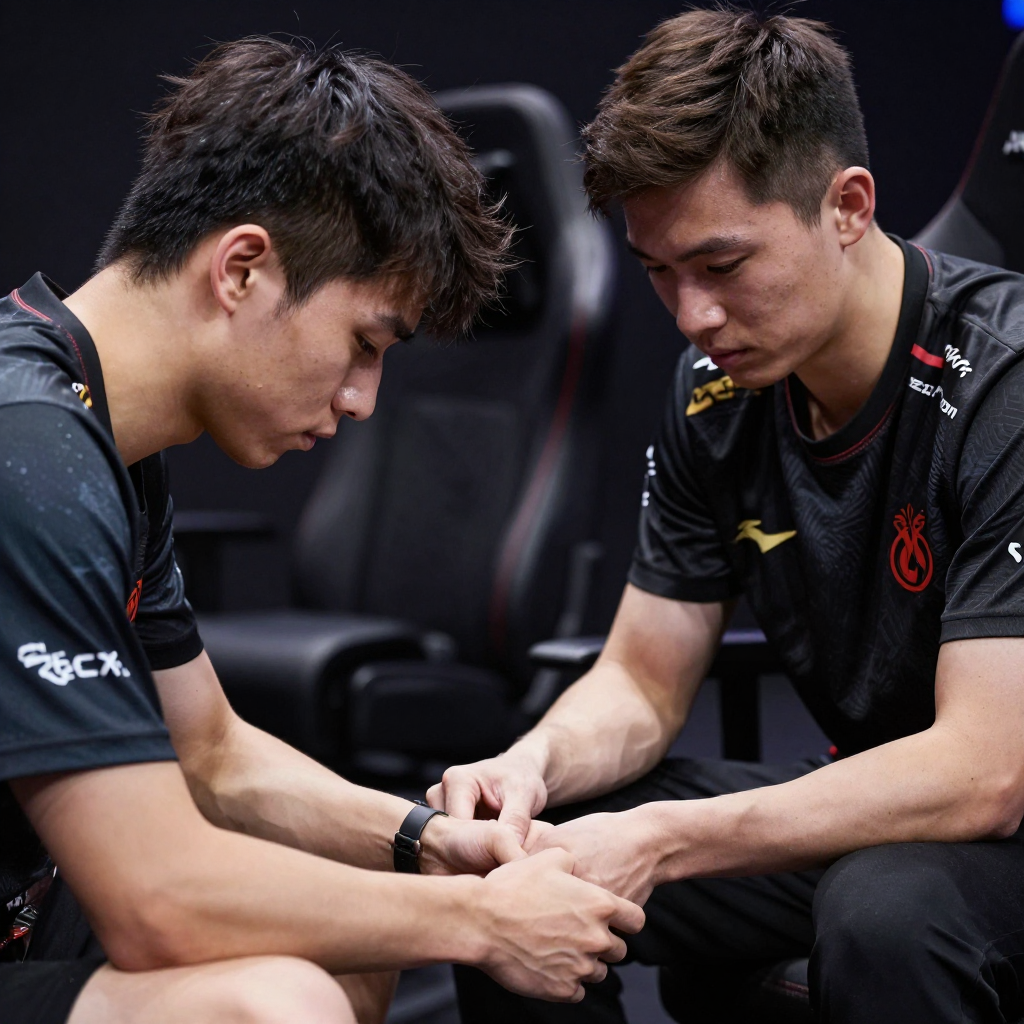
Psychology can improve sports betting analysis by adding context to form, tactics, and team news, but it should never be treated as a guaranteed predictor. Mental factors are difficult to measure consistently, and market prices may already reflect widely reported narratives.
When evaluating a traditional sports or esports matchup, consider observable evidence rather than vague labels such as a team being mentally weak. Useful questions include:
- How has the team responded after falling behind in recent matches?
- Does its communication remain effective during late-game pressure?
- Has a roster change altered leadership or role clarity?
- Will the format create unusual fatigue, travel demands, or extended concentration?
- Does the matchup force a player or team away from its preferred style?
These questions should sit alongside performance data, opponent strength, injuries, substitutions, map or surface preferences, tactical matchups, schedule congestion, and relevant market movement. A confident interview or dramatic comeback may be memorable, yet a small sample can produce misleading conclusions.
For responsible sports betting analysis, use psychology as a supporting layer. Build a base view from objective information, then ask whether pressure handling, motivation, or team dynamics strengthen or weaken that view. If the psychological evidence is ambiguous, reduce confidence rather than forcing a wager.
Set a budget before betting, avoid chasing losses, and remember that uncertainty remains even when a competitor appears emotionally composed. Psychology can explain possibilities; it cannot remove variance.
Competitive Gaming and Traditional Sports: Key Similarities and Differences
Competitive gaming and traditional sports share cognitive, emotional, and social demands, but they differ in physical exertion, training environments, team structures, and the type of pressure competitors experience. Esports emphasizes sustained attention, rapid information processing, and fine motor control, while traditional sports add larger-scale movement, physical contact, conditioning, and environmental variables.
| Area | Competitive gaming | Traditional sports |
|---|---|---|
| Cognitive workload | High-speed monitoring, pattern recognition, mechanical execution, and strategic adaptation | Perception, tactical reading, spatial awareness, and decisions during physical movement |
| Physical demands | Postural endurance, hand-eye coordination, precision, and fatigue from prolonged concentration | Strength, speed, endurance, balance, contact tolerance, and sport-specific conditioning |
| Team structure | Highly defined roles, direct voice communication, and rapid tactical cycles | Roles may be specialized, with verbal, visual, and movement-based coordination |
| Pressure profile | Relentless attention, public scrutiny, online competition, and punishment for small timing errors | Physical risk, crowd pressure, officiating, travel, selection, and visible mistakes |
The comparison should avoid stereotypes. Esports players are not free from physical demands, and traditional athletes are not defined only by physical ability. Both groups train perception, movement or execution, tactical understanding, emotional regulation, and social coordination.
For analysts, the central lesson is simple: look for repeatable behaviors rather than narratives. Preparation quality, concentration, adaptability, communication, and resilience can influence performance in either setting, but they interact with talent, tactics, health, rules, and randomness.
Frequently Asked Questions
Is competitive gaming psychologically similar to traditional sports?
Yes. Both require concentration, motivation, preparation, decision-making under pressure, emotional control, and teamwork. The physical and technical demands differ, but the psychological processes overlap substantially.
How does pressure affect esports players and athletes?
Pressure can narrow attention, increase muscle tension, speed up decisions, or encourage excessive caution. Preparation, routines, clear roles, and process-focused goals help competitors respond more consistently.
Why are communication and teamwork important in both esports and sports?
Communication allows teammates to share information, coordinate timing, and adjust tactics. Trust and role clarity reduce hesitation, especially when opponents disrupt the original game plan.
Can psychology help bettors analyze competitive gaming matches?
Yes, as one part of broader analysis. Recent form, tactical matchups, roster changes, format, and schedule should come first, while psychological observations can add context. They cannot guarantee a betting result.
What mental skills are most important for competitive performance?
The most transferable skills include concentration, decision-making, emotional regulation, resilience, communication, adaptable confidence, and the ability to follow a process when the result remains uncertain.