


Analyzing the Impact of Live Betting on Sports Entertainment: How In-Play Wagering Is Reshaping Fan Engagement
Something shifted in how people watch sports. The game itself hasn't changed — but the experience around it has. Live betting, once a niche feature offered by a handful of European bookmakers, has become one of the defining forces in modern sports entertainment. It's turned passive viewers into active participants, transformed slow moments into high-stakes decisions, and created an entirely new layer of engagement that runs parallel to the broadcast itself.
What Is Live Betting and How Does It Work?
Live betting — also called in-play betting — allows bettors to place wagers on a sporting event after it has already started, with odds updating continuously based on what's happening on the field. Unlike traditional pre-match betting, where all predictions are locked in before kickoff, in-play wagering responds to real-time developments: a red card, a momentum shift, an injury, a sudden scoring run.
The mechanics rely on sophisticated algorithms and data feeds that process live statistics — possession rates, shot counts, player tracking data — and translate them into real-time odds within seconds. Sportsbooks employ trading teams and automated systems working in tandem to keep markets accurate and liquid throughout the event.
For the bettor, this creates a fundamentally different kind of decision-making. You're not predicting the future from a cold start — you're reading a live situation and reacting to it. That shift, from prediction to reaction, is what makes in-play wagering feel so different from anything that came before it.
The Rise of Live Betting in the Modern Sports Landscape
In-play betting grew rapidly alongside two parallel developments: the explosion of mobile technology and the streaming revolution in sports broadcasting. The combination proved decisive.
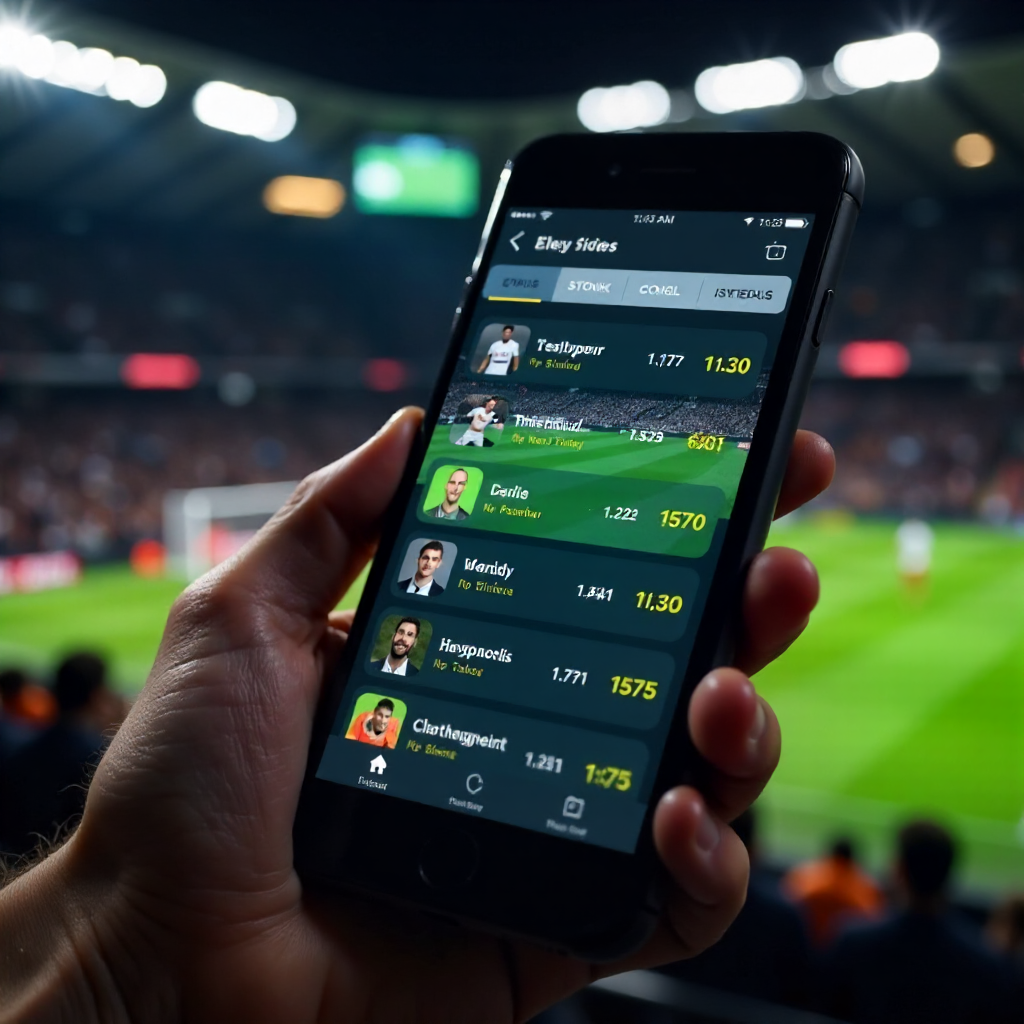
Ten years ago, placing a live bet required a desktop computer and a fast internet connection. Today, mobile betting apps have made it possible to wager from a stadium seat, a sports bar, or a living room couch — wherever the game is being watched. The friction dropped to near zero, and participation followed.
The numbers reflect this shift. According to industry research, in-play betting now accounts for more than 70% of total sports betting revenue at many major sportsbooks, up from roughly 30% a decade ago. Football (soccer), tennis, and basketball have driven much of this growth, partly because their continuous action generates a constant stream of bettable moments.
Regulatory changes in markets like the United States — where the Supreme Court's 2018 Murphy v. NCAA decision opened the door to state-level sports betting legalization — accelerated adoption further. Millions of new bettors entered markets where live wagering was already the standard offering.
How Live Betting Deepens Fan Engagement
Live betting makes watching sports more emotionally involving. A scoreless first half that might have prompted channel-switching becomes a tension-filled strategic puzzle when a bet is riding on the next goal scorer or the halftime result.
This is the core of what live betting does to fan engagement: it creates personal stakes in moments that would otherwise be background noise. A routine corner kick, a substitution, a timeout — each of these carries new significance when real-time odds are shifting around them. Viewers who might have drifted away during a lopsided game stay locked in, watching for the next swing in momentum.
Research into sports consumption behavior consistently shows that bettors watch more of a game, watch more games overall, and report higher satisfaction with the viewing experience compared to non-bettors. The causal arrow likely runs in both directions — engaged fans are drawn to betting, and betting deepens engagement — but the relationship is real and measurable.
There's also a social dimension. Live betting has become a shared activity, with friends tracking odds together, discussing in-game decisions, and reacting collectively to market movements. It adds a competitive layer to watching sport that doesn't require any athletic ability — just attention and judgment.
The Second-Screen Effect: Betting Platforms and Sports Broadcasting
Mobile betting apps have become the dominant second-screen companion to live sports broadcasts. While one screen shows the game, another shows shifting odds, live statistics, and cash-out options — creating a parallel information environment that runs alongside the official broadcast.
This second-screen experience has not gone unnoticed by broadcasters and streaming platforms. Sports rights holders have begun exploring deeper integration between live content and betting data, with some streaming services embedding real-time odds directly into their interfaces. The line between sports broadcasting and betting platforms is blurring in ways that were unimaginable a decade ago.
For viewer retention, this integration matters enormously. A fan who has an active in-play bet is almost certain to stay through the final whistle. Broadcasters and streaming services benefit from longer viewing sessions, higher ad impressions, and more engaged audiences — all downstream effects of live betting's grip on attention.
Some leagues have moved to formalize these relationships through official data partnerships, licensing real-time statistics exclusively to approved sportsbooks. The sports industry increasingly sees live betting not as an external phenomenon but as a core part of its commercial ecosystem.
The Psychological Pull of Real-Time Wagering
Live betting feels more exciting than pre-match betting because it eliminates the waiting. The feedback loop is immediate — place a bet, watch the next few minutes, see the outcome. That compressed cycle of anticipation and resolution is psychologically potent.
Behavioral researchers point to several mechanisms at work. Variable reward schedules — where outcomes are unpredictable but frequent — are among the most powerful drivers of continued engagement in any domain. In-play betting delivers exactly this: a rapid sequence of decisions, each with uncertain outcomes, each resolved quickly enough to prompt the next one.
The availability of cash-out features adds another psychological layer. Being able to lock in a profit or limit a loss mid-event gives bettors a sense of control that pre-match wagering doesn't offer. That perceived agency — even when the underlying randomness remains unchanged — makes the experience feel more skill-based than it actually is.
This isn't a criticism of live betting as an activity. But understanding why it feels so compelling helps explain both its rapid growth and the importance of approaching it with awareness.
Potential Concerns and Responsible Engagement
Responsible gambling becomes more important, not less, in a live betting environment. The same features that make in-play wagering engaging — speed, frequency, immediacy — also compress the time available for reflection before each decision.
Pre-match betting allows for research, deliberation, and a clear budget decision made in advance. Live betting happens in real time, often during emotionally charged moments in a game. The combination of excitement and speed can make it harder to apply the same level of considered judgment.
Most reputable sportsbooks now offer tools specifically designed for in-play environments: deposit limits, session time reminders, cool-off periods, and self-exclusion options. Organizations like the National Council on Problem Gambling provide resources for anyone who feels their betting habits are becoming difficult to manage.
The practical approach is straightforward: set a live betting budget separately from your pre-match budget, treat each session as time-limited, and use cash-out features as a discipline tool rather than a reactive one. Watching sport with a stake in the outcome should add to the experience — not create anxiety around it.
The Future of Live Betting and Sports Entertainment
The next phase of live betting will likely be defined by micro-betting — wagering on individual plays, possessions, or moments within a game rather than broader outcomes. Who wins the next point in a tennis match. Whether the next NFL play is a run or a pass. These hyper-granular markets are already available on some platforms and are growing fast.
Gamification is another emerging trend, with sportsbooks introducing leaderboards, achievement systems, and social features that frame betting within a broader entertainment experience. The goal is to increase session length and emotional investment beyond any single wager.
Deeper platform-broadcast integration seems inevitable. As streaming services compete for sports rights, the ability to offer embedded betting functionality — with odds updating in sync with the live feed — will become a differentiating feature. Some markets are already moving in this direction, and regulatory frameworks are slowly adapting to accommodate it.
What's clear is that live betting and sports entertainment are no longer parallel tracks. They're converging into a single, layered experience — one where watching and participating are increasingly hard to separate.
Frequently Asked Questions
What is the difference between live betting and pre-match betting?
Pre-match betting requires all wagers to be placed before an event begins, with fixed odds set in advance. Live betting allows wagers during the event, with odds adjusting continuously based on real-time developments. The key difference is timing and the dynamic nature of in-play odds.
Does live betting make watching sports more enjoyable?
For many fans, yes — having a personal stake in real-time outcomes increases emotional investment and keeps attention focused throughout the game. Research supports higher viewer satisfaction and longer watch times among in-play bettors. That said, enjoyment depends on responsible engagement; chasing losses or betting beyond comfortable limits has the opposite effect.
Which sports are most popular for in-play betting?
Football (soccer) leads globally due to its continuous action and wide range of in-play markets. Tennis is popular because each point creates a distinct wagering moment. Basketball, cricket, and American football also generate significant in-play activity, particularly in markets where those sports have large followings.
How do sportsbooks update odds so quickly during a live event?
Sportsbooks use automated trading algorithms fed by real-time data streams — player tracking, official statistics, and proprietary feeds — to calculate and update odds within seconds of each development. Human traders monitor markets for unusual activity and intervene when necessary, but the core process is largely automated.
How can bettors stay in control when engaging with live betting?
Setting a dedicated in-play budget before the session starts is the most effective single step. Using platform tools like deposit limits and session timers adds structural support. Treating live betting as entertainment with a defined cost — rather than a revenue opportunity — keeps the experience enjoyable and sustainable.