
How Virtual Reality is Revolutionizing Sports Training: From the Gym to the Game
Sports training has always evolved alongside technology. But virtual reality represents something different — not just a new tool, but a fundamentally different environment where athletes can train their minds and bodies without stepping onto a field. The shift is happening fast, and it's worth understanding exactly what it means.
What VR Training Actually Means in a Sports Context
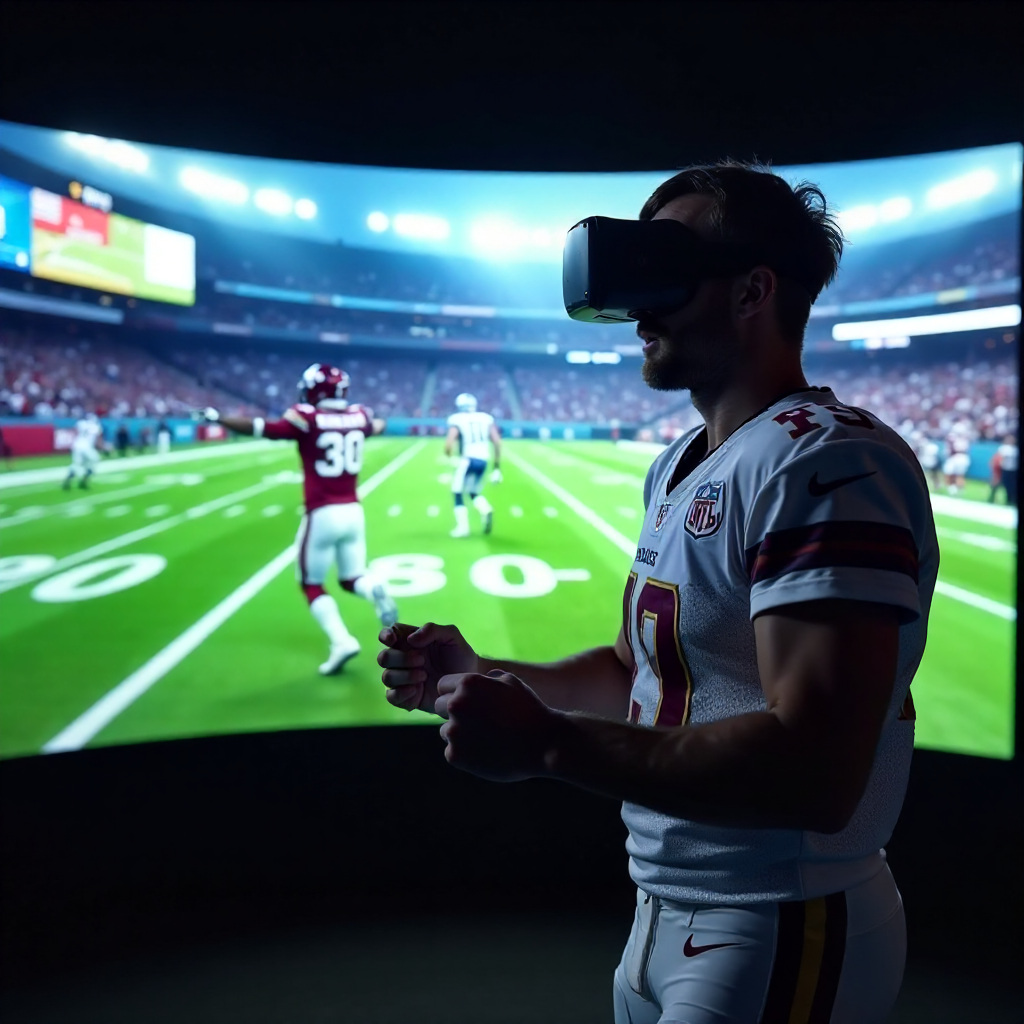
VR training in sports means using immersive simulation technology — typically a headset and motion-tracking sensors — to place athletes inside digitally recreated game environments. Instead of watching film or running drills, a quarterback can stand in a virtual pocket and read a defense. A soccer goalkeeper can face a penalty shootout from a realistic first-person perspective, hundreds of times over.
This isn't the same as video game graphics. Modern sports VR platforms use actual game footage and spatial data to reconstruct real scenarios. The athlete isn't watching — they're inside the moment, with 360-degree awareness and real-time decision demands. That distinction matters enormously for how the brain processes and retains the experience.
The core technology relies on VR headsets, positional tracking, and increasingly, biometric feedback systems that monitor heart rate, eye movement, and reaction latency during simulated scenarios. Some setups incorporate Mixed Reality (MR) overlays, blending physical props with digital environments to add a tactile dimension that pure VR lacks.
The Core Benefits: Why Athletes and Coaches Are Paying Attention
The primary appeal of VR training is the ability to develop cognitive speed and decision-making under simulated pressure — safely, repeatedly, and on demand. Physical conditioning still happens in the gym. VR addresses the mental game in ways traditional methods struggle to match.
Consider reaction time. Elite athletes don't just move faster — they read situations faster. A basketball point guard anticipating a double-team, a wide receiver adjusting a route based on safety coverage, a tennis player processing a serve trajectory before the ball clears the net. These reads are learned through repetition, and VR compresses that repetition dramatically.
Beyond speed, there's the question of high-pressure scenario simulation. Getting mental reps in a championship game environment, before ever experiencing one, has real value for sports psychology and mental visualization training. Athletes can walk into high-stakes moments having already "been there" hundreds of times in simulation.
Performance analytics integration adds another layer. Some platforms capture gaze tracking data, showing coaches exactly where an athlete's attention goes during a play — information that's nearly impossible to extract from traditional film review.
Which Sports Are Leading the VR Training Revolution
Football, basketball, and soccer are currently the most active adopters of VR training, largely because their cognitive demands — reading defenses, recognizing patterns, positioning — translate well to immersive simulation environments.
In the NFL, multiple franchises have integrated VR into quarterback development programs. The logic is straightforward: quarterbacks make split-second reads on every snap, and physical practice reps are limited by the risk of injury to skill players. VR removes that constraint entirely. A backup quarterback can take hundreds of mental reps daily without a single live snap.
The NBA has seen adoption for point guard decision training and defensive positioning work. Soccer clubs in Europe and South America have used immersive simulation for set-piece visualization and pressing pattern recognition.
Individual sport applications are growing too. Golfers use VR for course visualization and pre-shot mental rehearsal. Boxers train defensive head movement and combination recognition. Even competitive cycling teams have used virtual environments for race-strategy simulation on specific course profiles.
Injury Prevention and Rehabilitation: A Game-Changer Off the Field
VR's role in athlete rehabilitation may ultimately prove as significant as its training applications. When a player is recovering from an ACL tear or shoulder surgery, physical limitations restrict what they can do — but the brain still needs stimulation and sport-specific cognitive engagement to maintain readiness.
Immersive simulation allows injured athletes to stay mentally sharp during recovery. A player sidelined for six months can continue taking game-situation mental reps, maintaining sport cognition and reducing the psychological burden of extended absence.
On the injury prevention side, movement correction through VR is an emerging application. By overlaying biomechanical data onto simulated movement — showing an athlete in real time where their body mechanics deviate from an optimal pattern — coaches and physios can intervene before a chronic injury develops. This is particularly valuable in sports with high repetitive-stress injury rates, like baseball pitching and distance running.
Return-to-play programs benefit from the gradual stress progression that VR environments allow. An athlete can be exposed to full game-speed cognitive demands before their body is ready for full-contact training, helping maintain mental readiness while physical recovery continues.
VR Training Meets Sports Entertainment: The Bigger Picture
The technology powering athlete training and the technology reshaping how fans experience sports are converging. The same immersive simulation infrastructure used in training facilities is driving a new category of fan engagement experiences.
VR broadcasts — placing fans courtside, pitchside, or inside a locker room during pre-game warmups — have moved from novelty to genuine product. Several major leagues have experimented with volumetric capture and 360-degree live streaming, giving viewers an experience no traditional broadcast angle can replicate. For sports entertainment platforms, this represents a meaningful shift in how fans relate to the games they follow.
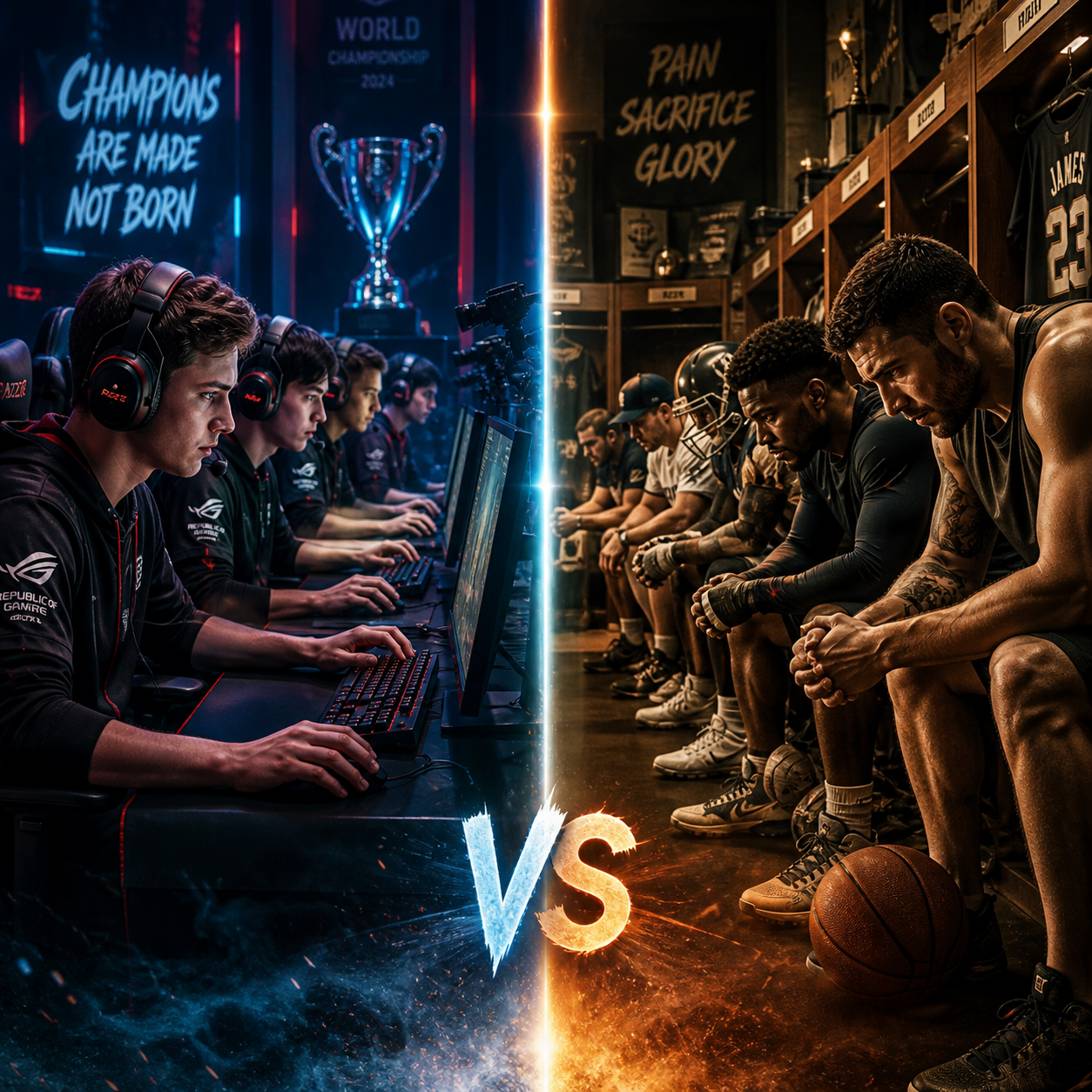
The crossover runs deeper than broadcast. The mental training tools used by professional athletes — pattern recognition, scenario simulation, pressure decision-making — share structural DNA with competitive gaming and esports, where similar cognitive demands exist. VR training platforms designed for physical sports have found interest from esports organizations looking to improve player reaction and situational awareness under competitive pressure.
For sports and entertainment as an industry, VR is erasing the clean line between participation and spectatorship. Fans can now step into a simulated free-throw attempt from Curry's perspective, or face a virtual 95mph fastball. That kind of access deepens connection to the sport in ways passive viewing never could.
Challenges and Limitations: What VR Still Can't Replace
VR training has real limitations, and any honest assessment has to address them. The most fundamental: physical conditioning cannot be simulated. Cardiovascular fitness, muscular strength, spatial body awareness under fatigue — these require the real world. VR is a cognitive and perceptual training tool, not a replacement for physical reps.
Cost remains a significant access barrier. High-fidelity sports VR setups — with quality headsets, motion capture, and sport-specific software — carry substantial price tags that make them inaccessible for most amateur clubs, youth programs, and smaller professional organizations. The technology is improving and prices are trending downward, but the gap between elite access and grassroots adoption is still wide.
There's also the question of transfer. Does practicing in VR actually make you better on the field? The evidence is promising, particularly for cognitive tasks like read progressions and defensive recognition, but it's not uniformly strong across all skill types. Fine motor skills — the precise hand positioning of a baseball pitcher's grip, the exact footwork of a tennis serve — don't transfer as reliably from virtual reps as cognitive pattern recognition does.
Motion sickness remains a real issue for some users, especially during extended sessions involving rapid perspective shifts. And perhaps most importantly, the social and competitive pressure of real competition — with actual teammates, officials, and crowd noise — creates a psychological environment that simulation can approximate but not fully replicate.
What the Future of VR in Sports Looks Like
The trajectory points toward integration rather than replacement. VR training is becoming a standard layer within athlete development programs, sitting alongside film study, physical conditioning, and live practice rather than competing with them.
AI integration is the next significant step. Platforms that adapt difficulty, opponent behavior, and scenario complexity in real time — responding to how an individual athlete is performing in a session — will make training meaningfully more efficient than static scenario libraries. Think of it as a coaching system that never repeats the same play twice and adjusts based on what it observes in your decision patterns.
Haptic feedback technology is closing the gap on physical realism. Haptic suits and gloves that simulate contact, resistance, and spatial feedback are still early-stage but developing quickly. As those improve, the physical conditioning limitation will shrink, though it won't disappear entirely.
The most significant shift may be in accessibility. As headset costs decline and sport-specific software becomes more standardized, youth and amateur programs will gain access to tools previously reserved for professional teams. A high school quarterback getting NFL-grade cognitive training reps would have been science fiction five years ago. Within a decade, it's likely to be unremarkable.
For athletes, coaches, and fans alike, VR isn't changing what sports demand — it's changing how thoroughly those demands can be prepared for. That's not a revolution in the dramatic sense. It's something more durable: a permanent expansion of what preparation looks like.
Frequently Asked Questions
Can amateur or youth athletes use VR training, or is it only for professionals?
Currently, high-end VR training platforms are mostly accessible to professional and college-level programs due to cost. However, consumer-grade VR headsets are increasingly capable, and several sport-specific applications are available at accessible price points. Broader youth adoption is likely within the next five to seven years as hardware costs continue to fall.
How does VR training compare to traditional film study and video analysis?
Film study is passive — athletes observe from a third-person perspective. VR puts them inside the scenario as a participant. The difference in how the brain processes and retains the experience is substantial. Film builds recognition; VR builds reactive decision-making under a closer simulation of real-time pressure. Both have value, and most programs use them together.
Does practicing in VR actually translate to real on-field performance improvements?
For cognitive tasks — reading plays, recognizing defensive formations, processing pre-snap information — the transfer evidence is reasonably strong. For fine motor skill execution, the transfer is more limited. VR appears most effective when combined with physical practice rather than used as a standalone training method.
What equipment is needed to start VR sports training?
At a basic level: a VR headset with positional tracking and compatible sport-specific software. More advanced setups add full-body motion capture, biometric sensors, and high-performance computing to render complex environments. Entry-level setups for cognitive training can start at a few hundred dollars; professional-grade installations run significantly higher.
Is VR being used in esports training as well as physical sports?
Yes. Esports organizations have adopted cognitive training tools — including some VR-based platforms — to improve reaction time, situational awareness, and decision speed under competitive pressure. The overlap with physical sports training methodology is substantial, since both disciplines prize rapid pattern recognition and composure in high-stakes moments. You can learn more about the intersection of technology and competitive performance through resources like the Wikipedia overview of esports.